
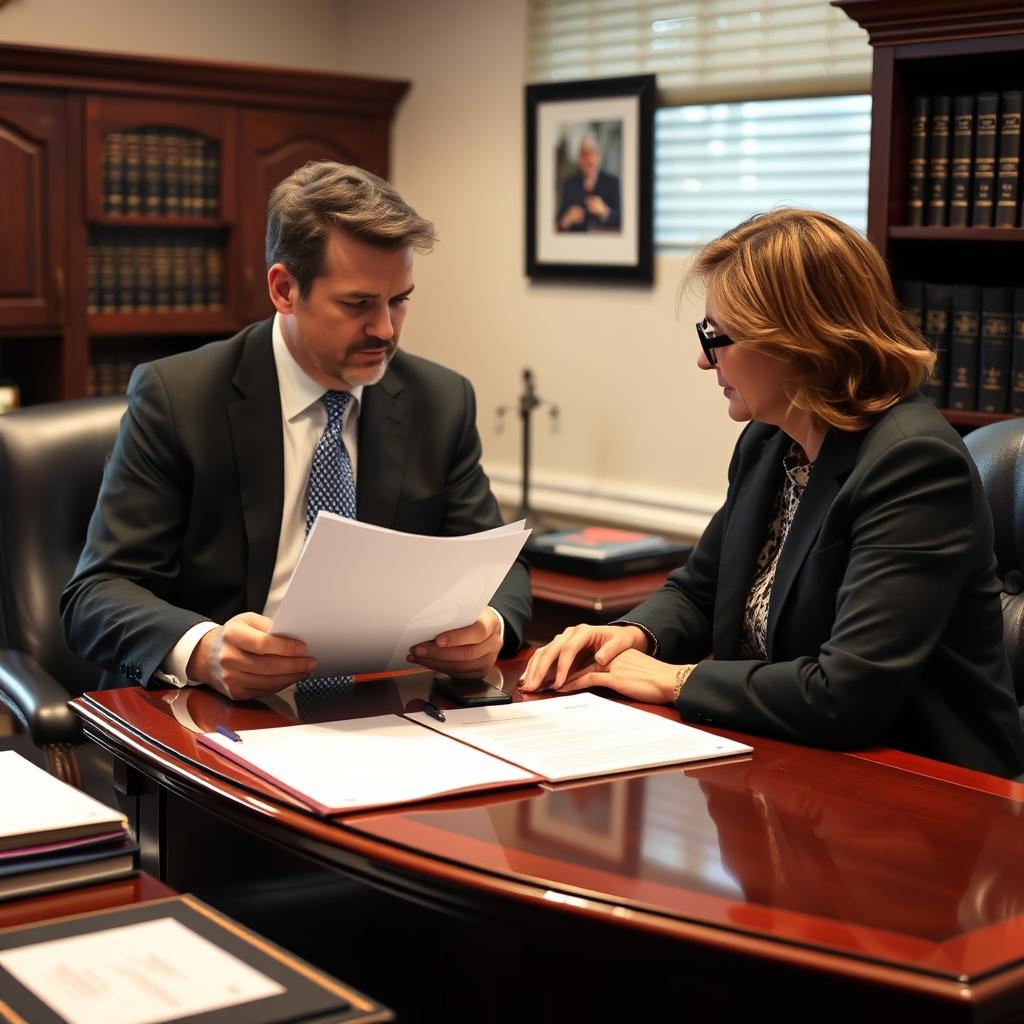
Habitual Offender Lawyer Caroline County, VA
If you have been declared a habitual offender in Caroline County, Virginia, you face the possibility of
permanent loss of driving privileges, a felony record, and incarceration. Caroline County General District
Court, located at 111 Ennis Street in Bowling Green, handles the civil and criminal proceedings that follow a
habitual-offender designation. Law Offices Of SRIS, P.C. represents clients in Caroline County who are
dealing with habitual-offender proceedings and needs to restore their driving rights. Call
(888) 437-7747 to request a consultation.
Law Offices Of SRIS, P.C. – Advocacy Without Borders.
Admitted in Virginia, Maryland, the District of Columbia, New Jersey, and New York. Founded 1997.
Call (888) 437-7747 — available during business hours.
Understanding Habitual Offender Proceedings in Virginia
Under Va. Code § 46.2-351 et seq., the Virginia Department of Motor Vehicles (DMV) can certify a driver
as a habitual offender after accumulating a pattern of serious traffic or criminal driving offenses
within a defined period. Once the DMV makes that certification, a court may enter an order declaring the
person a habitual offender. The order results in the revocation of the individual’s driver’s license for
an extended period and may trigger felony charges if the person is later caught operating a motor vehicle.
Being labeled a habitual offender is not the end of the road — but it requires immediate, careful legal
work. The underlying convictions that led to the designation can sometimes be challenged, and a petition
for restoration of driving privileges may be filed in the appropriate court. Caroline County General
District Court and the Circuit Court of Caroline County hear these matters, and local procedure can affect
the timeline and the evidence that must be shown.
How Caroline County Courts Handle Habitual Offender Cases
In Caroline County, the General District Court is often the first forum for traffic and misdemeanor
proceedings that contribute to a habitual-offender record. The court sits at 111 Ennis Street, Bowling
Green, VA 22427, and hears cases from communities throughout the county, including Bowling Green and
Carmel Church. When a driver reaches the point of being designated a habitual offender, the matter may
proceed through both the General District Court and the Circuit Court, depending on whether restoration
of driving privileges is sought or whether a felony charge for driving after being declared a habitual
offender is filed.
Because Caroline County lies along the I-95 corridor, many habitual-offender cases involve out-of-state
drivers who were originally cited for reckless-driving or DUI offenses while passing through the area.
The firm’s familiarity with the county’s court practices and its relationships with local prosecutors
can make a meaningful difference in how a case is resolved. Law Offices Of SRIS, P.C. and its Of Counsel
attorneys have appeared at the Caroline County General District Court and understand the expectations of
the bench.
Defense Strategies for Habitual Offender Charges
A skilled defense against a habitual-offender designation or a subsequent driving-while-HO charge requires
a multi-layered strategy. An experienced attorney will first examine the validity of the prior convictions
that gave rise to the DMV certification. Some older convictions may have been entered without proper
advisement of rights or may have underlying procedural defects. A challenge to a single predicate offense
can sometimes undermine the entire habitual-offender determination.
When the matter involves a new charge of driving after being declared a habitual offender, the defense
often focuses on whether the Commonwealth can prove each element of the felony beyond a reasonable doubt.
Mr. Sris and his Of Counsel will review the charging documents, any traffic-stop evidence, and the
defendant’s driving history to identify weaknesses in the prosecution’s case. Negotiation with the
Commonwealth’s Attorney is also an important tool — in appropriate cases, a reduction of charges or a
deferred disposition may be possible.
About Mr. Sris and His Of Counsel Team
Mr. Sris, Owner and Founder of Law Offices Of SRIS, P.C., is a former prosecutor who has practiced
criminal and traffic defense since 1997. He founded the firm with a commitment to providing strategic,
detail-oriented representation. Mr. Sris’s Of Counsel team includes attorneys with backgrounds as a
former Maryland Assistant State’s Attorney and a former Virginia State Trooper — a combination that
brings both prosecution insight and law-enforcement procedural knowledge to every habitual-offender case.
Mr. Sris testified before the Virginia House Courts of Justice Committee in support of 2019 HB 635 (chief
patron Del. David Bulova). The firm’s documented case results in Caroline County traffic matters
include dismissals and reductions. Results may vary.
Frequently Asked Questions
What is a habitual offender in Virginia?
A habitual offender is someone whom the Virginia DMV has certified as having accumulated a
statutory number of qualifying traffic or criminal driving offenses, resulting in a court‑ordered
revocation of driving privileges. The designation is made under Va. Code § 46.2-351 et seq. Once
the order is entered, the person’s license is revoked. Driving after being declared a habitual offender
is a felony offense.
How does a lawyer defend against habitual offender charges in Caroline County?
An attorney can challenge the prior convictions that led to the designation, file a petition to
restore driving privileges, and contest any subsequent driving-while-HO charges by attacking the
evidence and raising procedural defenses. Local familiarity with the Caroline County General
District Court and the Commonwealth’s Attorney’s office can also aid in negotiating a favorable
resolution.
What should I do if I am facing habitual offender charges in Caroline County?
Contact a traffic-defense attorney immediately and do not drive until your status is clarified.
Preserve any documents related to your prior traffic cases and avoid discussing the matter with anyone other
than your lawyer. An early case assessment can determine whether a restoration petition is viable.
Can a habitual offender designation be removed in Virginia?
Yes, a person may petition the Circuit Court for restoration of driving privileges after a
specified waiting period and upon showing that they meet statutory eligibility requirements.
The process involves demonstrating rehabilitation, compliance with any DMV requirements, and sometimes
completing a driver-improvement program.
How do I restore my driver’s license after being declared a habitual offender?
You must file a petition in the Circuit Court of the county where you reside or where the
habitual-offender order was entered. The court will consider your driving record, the length of
time since the order, your need for a license, and evidence that you can be a safe driver. Legal
representation can improve the likelihood of a successful petition.
What are the penalties for driving as a habitual offender in Virginia?
Driving after being declared a habitual offender is a felony offense that can result in
incarceration, a substantial fine, and additional loss of driving privileges. The specific
penalty depends on the facts of the case and the defendant’s prior record, but a conviction carries long‑term
consequences beyond the immediate sentence.
Do I need a lawyer for habitual offender proceedings in Caroline County?
Because habitual-offender proceedings can lead to permanent license revocation and felony
charges, legal representation is strongly advised. An experienced attorney can protect your
rights, identify defenses, and pursue favorable outcomes at the Caroline County courts.
How much does a habitual offender lawyer cost in Caroline County?
Fees vary depending on the complexity of the case, the number of prior offenses involved, and
whether multiple court hearings are needed. Law Offices Of SRIS, P.C. offers consultations to
discuss your situation and provide fee information. Call (888) 437-7747 to schedule a consultation.
I’m an out-of-state driver facing a habitual offender charge in Caroline County. Can you help?
Yes, the firm regularly represents out-of-state drivers who have been charged in Caroline County
and can appear in court on your behalf so you do not have to travel back to Virginia for every hearing.
The firm has experience with the Interstate Driver License Compact and can help coordinate your defense
with implications in your home state.
What is the process for challenging a habitual offender determination in Caroline County?
The process begins with a thorough review of all underlying traffic and criminal convictions that
the DMV used to certify you as a habitual offender. If a conviction can be vacated or set
aside, the habitual-offender declaration may be unenforceable. The firm then files the appropriate
pleadings in the Caroline County Circuit Court or General District Court and advocates at the hearing.
Can I get a restricted license if I am declared a habitual offender?
Under certain circumstances, Virginia law allows a court to grant a restricted license for
reasons such as employment, education, or medical necessity. A restricted-license petition
requires convincing the court that you pose no danger to the public and that the hardship justifies a
limited driving privilege. The firm can help you present that case.
How long does a habitual offender designation last in Virginia?
The initial revocation period is typically several years, but indefinite if the person does not
petition for restoration. The exact duration depends on the statutory scheme and on whether the
individual satisfies all conditions for reinstatement. Early legal intervention can shorten the effective
period.
To discuss your specific situation, contact Law Offices Of SRIS, P.C. at (888) 437-7747.
More Traffic Defense Resources
- Fairfax County Traffic Lawyer
- Prince William County Traffic Lawyer
- Fairfax City Traffic Lawyer
- Falls Church Traffic Lawyer
- Manassas Traffic Lawyer
Official Virginia Resources
Attorney advertising. Prior results do not guarantee a similar outcome.
Results may vary.
Case results depend on a variety of factors unique to each case.