
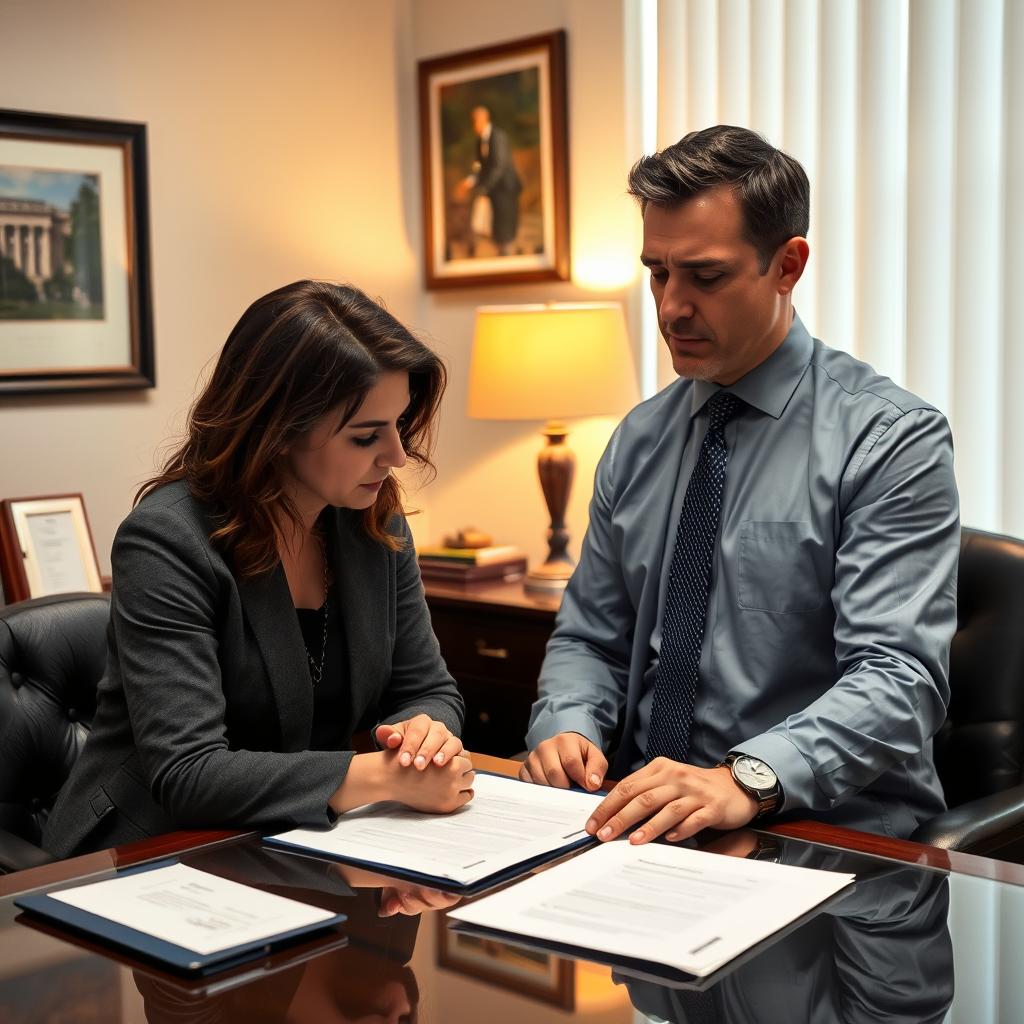
Leaving the Scene Lawyer Foggy Bottom, DC
An allegation of leaving the scene of an accident in the District of Columbia carries serious potential consequences, including criminal penalties. If you are facing such a charge arising anywhere in Foggy Bottom—whether near George Washington University, along Virginia Avenue, or in the residential blocks north of the Foggy Bottom Metro—prompt legal guidance is important. Law Offices Of SRIS, P.C. represents individuals charged with leaving the scene offenses in DC Superior Court and works to protect their rights throughout the criminal process. Reach our location at (888) 437-7747 to request a consultation. Law Offices Of SRIS, P.C. – Advocacy Without Borders.
What Leaving the Scene Means in Foggy Bottom, Washington D.C.
Leaving the scene of an accident—sometimes referred to as a hit-and-run—is generally defined as the failure of a driver to stop, provide required information, and render reasonable assistance after being involved in a collision. Under D.C. Law, drivers must remain at the scene, exchange identifying details, and report injuries or property damage to law enforcement. A violation can result in misdemeanor criminal charges.
Foggy Bottom residents and commuters are familiar with the heavy traffic near the U.S. Department of State, the Kennedy Center, and the campus of George Washington University. Accidents in this area are investigated by the Metropolitan Police Department. When a driver leaves before authorities arrive, the ensuing investigation often involves witness statements, traffic camera footage, and vehicle damage analysis. Any resulting charge is prosecuted at the DC Superior Court, located at 500 Indiana Avenue NW, just a short distance from Foggy Bottom. The firm’s Arlington location is approximately 4.5 miles from the courthouse, allowing our attorneys to appear regularly in the District’s criminal division and remain familiar with local prosecutorial practices.
The consequences of a leaving‑the‑scene conviction can include jail time, court‑imposed fines, probation, restitution, and driver’s license consequences. Because the charge can also affect your driving record and may be considered a criminal conviction, its impact can extend to employment, professional licenses, and other areas. Our attorneys examine every aspect of the case—from the initial police report to the evidence gathered by the District’s traffic‑safety cameras—to build a thorough factual picture.
How Mr. Sris and His Of Counsel Handle Leaving the Scene Cases
Mr. Sris and his Of Counsel team bring over 120 years of combined legal experience to traffic defense matters. Results may vary. When retained on a leaving‑the‑scene case in the District, they begin by reviewing all available evidence, including accident‑scene photographs, witness accounts, surveillance footage, and police reports. They examine whether the elements of the charge are supported—namely, that the person was driving, that there was an accident involving damage or injury, and that the person knowingly left without providing information or assistance. Weaknesses in any element may provide grounds for challenge at pretrial motions or at trial.
Our attorneys appear at the DC Superior Court, Criminal Division, for arraignment, status hearings, and trial. Depending on the facts, they may negotiate with the government for a reduced charge, work to resolve the matter through a pretrial diversion program, or prepare the case for trial when that is in the client’s best interest. Throughout the process, they explain each step and respond to client questions so that decisions are made with a clear understanding of the potential outcomes. Because each leaving‑the‑scene case depends on the specific evidence and the client’s background, the approach is tailored to the individual matter.
About Mr. Sris and His Of Counsel Team
Mr. Sris, Owner and Founder of Law Offices Of SRIS, P.C., has practiced since 1997 and is admitted to the bars of Virginia, Maryland, the District of Columbia, New Jersey, and New York. He is a former prosecutor, which provides him with insight into how the government builds a leaving‑the‑scene case and where its proof may be vulnerable. Mr. Sris and his Of Counsel have documented 4,739+ case results across all practice areas since 1997; of those, 3,528+ are in traffic matters. Results may vary.
The Of Counsel attorneys who assist with DC traffic cases bring extensive experience. Matthew Greene, Of Counsel, has been admitted in the District of Columbia for many years and appears regularly in DC Superior Court. (Note: For purposes of this overview, the collective “Of Counsel” designation is used to describe the group of non‑employee attorneys who work with Mr. Sris on client matters.) Every attorney working on the firm’s DC traffic files has well over a decade of practice experience, allowing the team to draw on a broad base of knowledge when defending leaving‑the‑scene allegations.
Frequently Asked Questions
What is leaving the scene of an accident in D.C.?
Leaving the scene of an accident occurs when a driver involved in a collision fails to stop, provide identifying information, or render reasonable aid. Under D.C. Law, this obligation extends to any accident that causes property damage, personal injury, or death. Even a minor fender‑bender near Foggy Bottom’s busy intersections—such as Washington Circle or 23rd and I Streets—can give rise to a charge if the driver does not remain at the scene. The duty applies regardless of who was at fault, and a person may be charged even if no one was injured. The Metropolitan Police Department investigates these incidents, and prosecution occurs in DC Superior Court.
Is leaving the scene a crime in D.C.?
Yes, leaving the scene of an accident can be charged as a misdemeanor criminal offense in the District of Columbia. If the collision involves serious bodily injury or death, the potential charge may escalate. A criminal conviction can result in jail time, court‑ordered fines, and a permanent criminal record. Unlike a simple traffic infraction, a leaving‑the‑scene charge carries the weight of a criminal prosecution. For Foggy Bottom residents, the case is heard at DC Superior Court, where the government must prove each element beyond a reasonable doubt. Even a first offense can have lasting consequences, so prompt legal advice is advisable.
What are the penalties for leaving the scene in Foggy Bottom?
Penalties vary depending on the severity of the accident and the defendant’s criminal history. A conviction for a misdemeanor leaving‑the‑scene offense may expose a person to jail time, a fine imposed by the court, and a term of probation. Additional consequences can include restitution for property damage, driver’s license points, and increased insurance premiums. In cases where someone suffered serious injury, the potential sentence is higher. The DC Superior Court judge determines the appropriate sentence after considering the specific facts of the case, any evidence of aggravating or mitigating circumstances, and the defendant’s background. Because each case is unique, it is important to understand the particular allegations and the range of possible outcomes before deciding how to proceed.
Do I need a lawyer if I am charged with leaving the scene?
While you are not legally required to have an attorney, the potential consequences of a leaving‑the‑scene conviction make experienced representation a prudent choice. A lawyer can evaluate whether the government can prove each element of the charge, identify any procedural errors in the investigation, and argue for a reduction or dismissal when the facts support it. At DC Superior Court, navigating the criminal process alone—from initial appearance through trial—poses risks that may not be apparent at the outset. Mr. Sris and his Of Counsel have handled thousands of traffic‑related matters in the District and can help you understand your options. To discuss your particular situation, reach Law Offices Of SRIS, P.C. at (888) 437-7747.
How does a leaving‑the‑scene case proceed at DC Superior Court?
A leaving‑the‑scene case begins with an arrest or a summons, followed by an arraignment where the charge is formally presented. After arraignment, the court schedules status hearings to determine the progress of discovery—the exchange of police reports, witness statements, and other evidence. If the matter is not resolved through negotiation or a pretrial program, it proceeds to trial. During trial, the government presents its evidence, and the defense has the opportunity to cross‑examine witnesses and present its own evidence. The judge (or, in some instances, a jury) then determines guilt. Throughout the process, the court’s calendar and the complexity of the evidence influence how quickly the case moves forward. Our attorneys represent clients at each stage and aim to achieve the most favorable outcome the facts allow.
What should I do if I am involved in a collision in Foggy Bottom?
Stop your vehicle immediately, provide your name, address, and vehicle registration to the other party, and render any assistance that may be needed. If the accident causes injury or significant property damage, call 911 to report the incident. Do not leave the scene before police arrive and you have given your information; leaving prematurely is often what leads to a criminal charge. After complying with your legal obligations, consider contacting a lawyer to understand your rights—especially if you are later contacted by law enforcement. If you are already facing a leaving‑the‑scene allegation, preserving evidence (photographs, repair receipts, witness contact information) can be helpful. For guidance on your specific situation, reach Law Offices Of SRIS, P.C. at (888) 437-7747.
Can a leaving‑the‑scene charge be reduced or dismissed?
Yes, under certain circumstances the government may agree to reduce the charge or the court may dismiss it. A reduction might be possible if the evidence does not clearly establish that the driver knowingly left the scene or if the alleged damage was minimal. In some cases, the firm’s attorneys have been able to show that the person was unaware an accident had occurred—for example, in a low‑speed parking‑lot bump. If the driver later reports the accident or takes steps to provide information voluntarily, the government may view that as a mitigating factor. Every case depends on its own facts, and past results do not guarantee a similar outcome. Mr. Sris and his Of Counsel evaluate the evidence carefully to determine whether a reduction or dismissal may be appropriate. Results may vary.
How does a leaving‑the‑scene conviction affect my driving record?
A conviction for leaving the scene typically results in points being assessed against your driving record and can lead to license consequences. In the District, the Department of Motor Vehicles administers points for traffic‑related convictions; a leaving‑the‑scene offense generally carries a significant point total. Accumulating too many points within a certain period can trigger a license suspension. Additionally, the conviction becomes part of your criminal record, which can affect employment and professional licenses. The firm’s attorneys can explain the specific point consequences in your case and explore whether the charge might be resolved in a way that minimizes the effect on your driving privileges.
What is the difference between leaving the scene and hit‑and‑run in DC?
In everyday language, “leaving the scene” and “hit‑and‑run” describe the same conduct—failing to stop and provide information after an accident. In the District of Columbia, the offense is generally referred to as leaving the scene of an accident (or, when involving injury, leaving after colliding). There is no separate hit‑and‑run statute distinct from leaving the scene. The severity of the charge depends on whether the collision caused property damage, personal injury, or death. Regardless of the label used, the criminal implications are serious, and the case proceeds through DC Superior Court.
How can Law Offices Of SRIS, P.C. help with a leaving the scene charge?
Law Offices Of SRIS, P.C. can provide legal representation at every stage of a leaving‑the‑scene case in the District of Columbia. From the initial investigation to resolution, the firm’s attorneys can examine the government’s evidence, identify defenses, and advocate for favorable outcomes under the facts. They appear regularly in DC Superior Court and are familiar with how leaving‑the‑scene cases are handled by the District’s prosecutors. To discuss your matter with an attorney, contact Law Offices Of SRIS, P.C. at (888) 437-7747. Consultations are available by appointment. The firm serves the entire Foggy Bottom community from its Arlington location at 1655 Fort Myer Dr, Suite 700, Arlington, VA 22209.
Serving Foggy Bottom and the surrounding DC communities: Washington D.C. Traffic Lawyer | Georgetown Traffic Lawyer | Spring Valley Traffic Lawyer | Cleveland Park Traffic Lawyer
Primary sources: D.C. Code | DC Courts | DC DMV
Attorney advertising. Prior results do not guarantee a similar outcome. Case results depend on a variety of factors unique to each case. Results may vary.